

-
 +86 18924678741
 -
 sales@hjlcharger.com
 -
 Shenzhen City, Guangdong Province, China
What thickness of wire should be used for electric vehicle chargers? General reference for different power levels
Before talking about how thick the wire is needed for an electric vehicle charger, we need to make a bottom line: the thickness of the wire used depends not only on the rated power of the electric vehicle charger. It also depends on the actual distance from the electricity meter or distribution room to the parking space, whether the wires are threaded through pipes or laid openly, and whether it is hot in the local summer. The following numbers are common practices in normal environments where the distance is not too far (such as within 50-60 meters). If it is too far away or has too many pipes, the wire diameter usually needs to be increased by one level.
1、 Slow charging (household)
The 3.5kW on-board charger has a current of around 16 amperes and typically uses 4 square millimeters of copper wire.
7kW household slow charging, current of over 30 amps, commonly equipped with 6-square-meter copper wire. If the cable length exceeds 70-80 meters, some people may use 10 square meters.
11kW three-phase, with about 16 amps per phase, commonly equipped with 5 cores and 6 square meters, can also be converted with 4 square meters but with a smaller margin.
22kW three-phase, with a current of around 30 amps, usually starting from 6 square meters, and up to 10 square meters if far away.
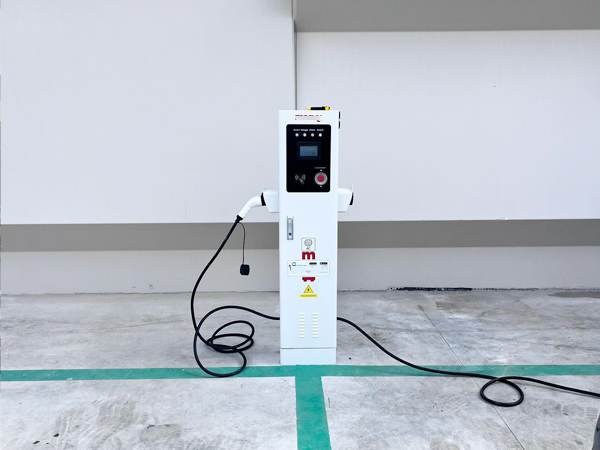
2、 DC fast charging
20kW, some use 6 square meters, some use 10 square meters, depending on the distance and pipe penetration situation.
30kW is approximately 45A current, recommended for 10 square meters, or 16 square meters for longer distances.
40kW with over 60 amps, available for both 10 and 16 square meters.
60kW ranging from 80 to 100 amps, commonly 25 or 35 square meters.
90kW is about 120A, and 35 square meters are more common.
120kW, 150-60A, commonly used for incoming lines of 50 square meters or 70 square meters.
180kW uses 70 or 95 square meters.
240kW using 95 or 120 square meters.
From 360kW to 480kW, 150, 185 or even thicker wires are used, and sometimes two wires are used to run together.
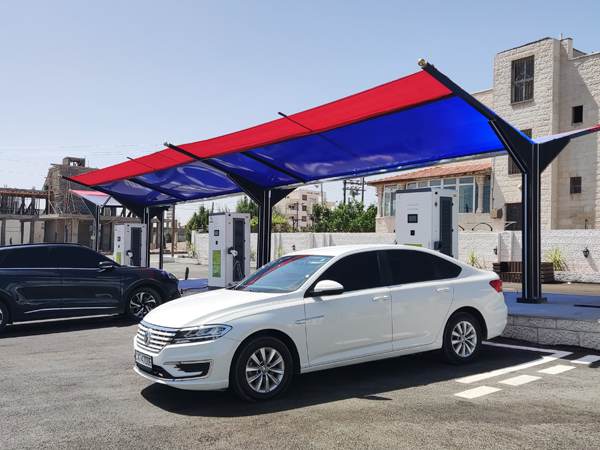
3、 Split type high-power electric vehicle charger
The split type electric vehicle charger is separated from the large rectifier cabinet in the charging station and the electric vehicle charger behind it.
480kW, with an incoming current of over 700A, commonly used in parallel with two 185 square wires.
600kW over 900A, connected in parallel with multiple 240mm wires.
720kW current of over 1100A, some say using three 240A wires together.
800kW, 960kW, and even 1040kW are similar, using multiple lines of 240, 300, or 400 in parallel.
If this level of charging gun cable is liquid cooled, it can not only rely on thick copper wire, but also on liquid circulation to dissipate heat, and the gun cable can be made less heavy.
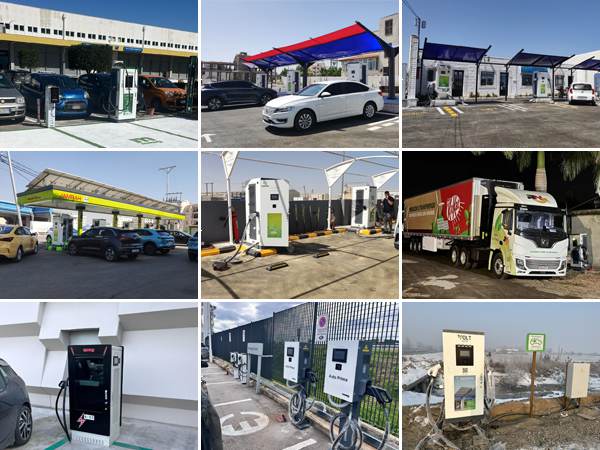
Attention: The thickness of the wire required for the above electric vehicle chargers is for reference only!
A successful conclusion!Looking forward to the nex...
THE 4TH PEVS 2025 THE LEADING EV SHOW IN INDONESIA...
2024 Mid-Autumn Festival Holiday NoticeThe bright ...
The electric car points for electric vehicles main...
The current status and develop
Pain points and cooperation opportunities of charg...
Who has the most EV fast charg
Building an electric vehicle c
What is a charging pile? A charging pile is a spec...
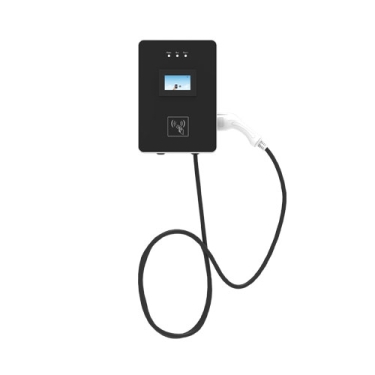
Vehicle 7 kW outdoor ev charger wallbox 11 kW 22 kW represen...
Get last priceWhenever you need us, we're here for you. --- Contact us for all your support needs, from technology, general queries to information support, etc. Our hotline numbers and e-mail are open 24hx7d for your needs.
 +86 18924678741
sales@hjlcharger.com
Shenzhen City, Guangdong Province, China
+86 18924678741
sales@hjlcharger.com
Shenzhen City, Guangdong Province, China