

-
 +86 18924678741
 -
 sales@hjlcharger.com
 -
 Shenzhen City, Guangdong Province, China
More and more people are installing electric vehicle chargers, ranging from slow charging in their own parking spaces to fast charging on the roadside and at stations, with a significant difference in power. How big should the incoming line be? I really can't answer this in a word. Let's talk about the common situations based on different power levels.
Let's start with the small one, 7 kilowatts
This is usually a slow charging method for household or workplace use. A household pile with a power of 7 kilowatts, a current of over 30 amperes, and a distance of not far (such as within 30 meters) is quite common, with a 6-square-meter copper wire. If it is pulled far, beyond 50 meters or even 80 meters, some people will consider 10 square meters. It also depends on whether your electricity meter is single-phase or three-phase. If it is three-phase, the power and current are the same, and the wire diameter can be slightly loosened.
Speaking of medium-sized, 11 kW, 22 kW
11 kilowatts is mostly three-phase electricity, with a current of approximately 16-17 amperes per phase. If the distance is not long, someone will use 4 or 6 square meters. 22 kilowatts of three-phase electricity, with a current of about 30 amps. It is generally recommended to start from 6 square meters, and if it is far away, it can be 10 square meters. However, all of these depend on the on-site wiring, pipe installation, or cable tray. Whether the ambient temperature is high or not, conservative people will choose a higher level.
Larger, 40 kW and 60 kW DC chargers
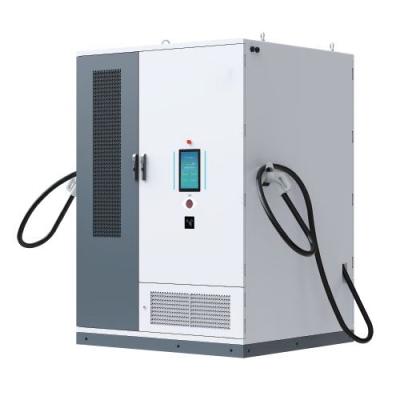
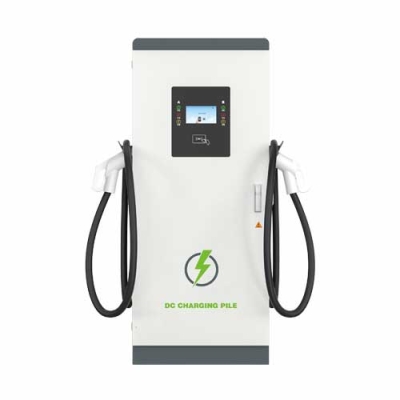
This is entering the range of stations or commercial fast charging. 40 kW DC, the current may be over 60 amps (depending on the voltage), and the incoming line often needs to be 10 or 16 square meters or more. A 60 kW DC charger with a current of approximately 80-100 amps, often using 25 square or 35 square copper cables. Similarly, if the distance is far or if several wires are squeezed together and the heat dissipation is not good, they need to be thickened.
Further up, 120 kW, 180 kW, 240 kW
These are the power of common fast charging stations nowadays. A current of 120 kWh may be 150-60 amps, and the incoming line is often 50 or 70 square meters. 180 kW, 240 kW, higher current, cables of 70 square meters, 95 square meters, and even 120 square meters are available. And the station is not just equipped with one pile. When several piles are charged at the same time, the total incoming line needs to consider the coefficient of simultaneous use, which needs to be calculated by a professional electrician.
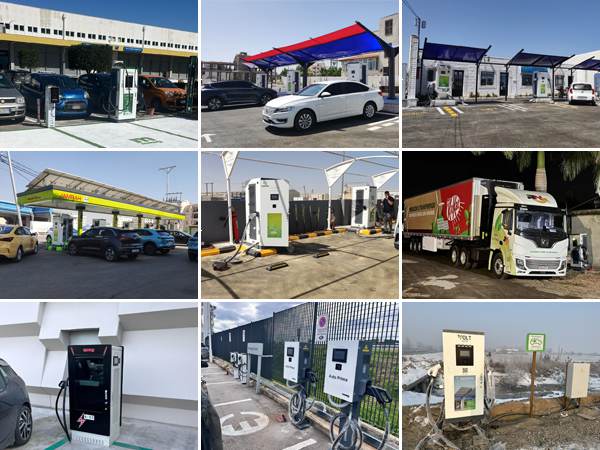
Ultra high power, 360 kW, 480 kW and above
This type is more common in the latest supercharging stations. The current is several hundred amperes, usually using a dual gun or liquid cooled electric vehicle charger. The incoming line may use 150 square meters, 185 square meters, or even larger, and sometimes copper bars or multiple cables are connected in parallel. This type of project requires professional design, not estimation based on experience.
Why can't we provide a fixed correspondence table
Because there are too many things that affect the incoming line. At the same power, pulling 30 meters and 200 meters may result in a difference of two wire diameters. Whether cables are buried underground, threaded through pipes, laid in the air, or squeezed in cable trays, the heat dissipation is different. High ambient temperature and direct sunlight require thicker wires. Whether to use copper wire or aluminum wire is also different, aluminum wire has to be thicker by one grade or even more than copper wire. The capacity of the transformers in the station and the size of the higher-level switches also affect the final selection.
Real advice
If you install your own home charger, if you're not sure, ask the technician who installed it for you, or tell the cable seller about the power and distance for them to estimate roughly. If you are responsible for a small fast charging station, it is best to find a certified electrician or design unit to visit the site and not just ask online. Don't think about it yourself at Dachang Station. It's important to hire people, and safety is paramount.
In short, electric vehicle chargers come in sizes ranging from 2.5 square meters to over 100 square meters. The key depends on the specific situation of the pile in your hand, there is no unified answer. Asking someone who is knowledgeable on site is more practical than anything else.
The Spring Festival is approaching, and in order t...
2024 Mid-Autumn Festival Holiday NoticeThe bright ...
According to the Notice on the Arrangement of Some...
The cooperation methods of electric vehicle charge...
How much does it cost to build an electric car cha...
EV Charger Factory: Hongjiali - the leader in crea...
What does the EVSE stand for? What is the differen...
what is inside an ev charger?E
How much cable is needed for a 480kW DC charger? I...
Whenever you need us, we're here for you. --- Contact us for all your support needs, from technology, general queries to information support, etc. Our hotline numbers and e-mail are open 24hx7d for your needs.
 +86 18924678741
sales@hjlcharger.com
Shenzhen City, Guangdong Province, China
+86 18924678741
sales@hjlcharger.com
Shenzhen City, Guangdong Province, China