

-
 +86 18924678741
 -
 sales@hjlcharger.com
 -
 Shenzhen City, Guangdong Province, China
The installation of an electric vehicle charger, no matter where it is placed, cannot be separated from three key words: electricity, ground, and people. The power refers to whether the power capacity is enough, the ground refers to whether the site is the final say or not, and the human refers to whether the approval and coordination are smooth or not. But in different scenarios, the emphasis is indeed quite different.
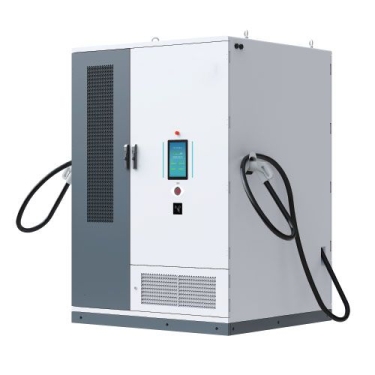
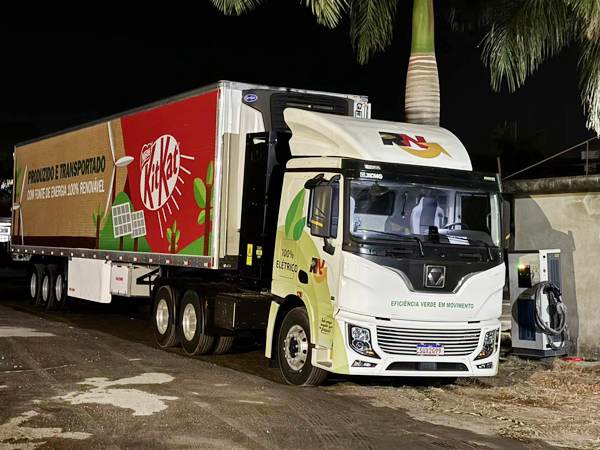
For example, charging heavy trucks. A heavy truck fleet needs to install electric vehicle chargers, and the common difficulty is that the power requirements are too high, with hundreds of kilowatts that cannot be moved, and ordinary transformers cannot withstand it at all. Moreover, the heavy truck has a long body and a large turning radius. The layout of charging parking spaces and the entry and exit of vehicles make it impossible to turn due to the small space. In addition, heavy trucks are often charged at night or during shift changes. If the power distribution between electric vehicle chargers is not reasonable, it is easy for some cars to charge quickly while others wait. In terms of installation conditions, it is generally necessary to first confirm that the site can be connected to high-voltage electricity or willing to spend money to increase capacity; Secondly, the road surface should be hardened and thickened, and sufficient length (at least 15 meters or more) should be left in the parking area. At this point, it is possible to consider using a charging stack with intelligent power allocation function, such as the high-power DC split scheme of Hongjiali(HG Power). The host and terminal are separated, and the power can be flexibly adjusted to a certain gun without having to fully allocate power to each parking space, which can also reduce the cost.
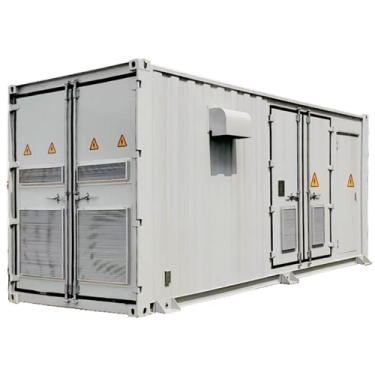
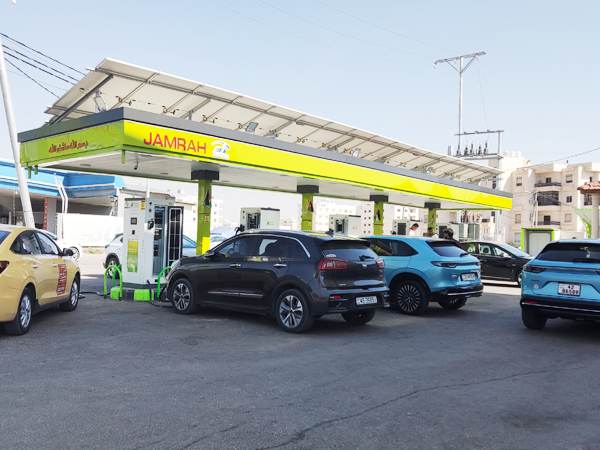
There is also a high-speed service area. The difficulty of installing electric vehicle chargers on highways lies in the fact that they are idle during weekdays and busy during holidays. Equipping transformers according to peak values wastes most of the year; Not matching according to peak demand, being scolded during long holidays. In addition, the service area belongs to the highway management company and requires coordination with several units, resulting in a lengthy approval process. Another practical issue is that the distribution room in the service area is often a bit far from the parking space, and the cost of wiring is not low. The installation conditions are roughly as follows: first, obtain the operating license from the high-speed property owner, then conduct a charging load forecast, and preferably leave room for expansion interfaces. Some service areas will use a combination of "fixed piles+mobile storage and charging" to pull the mobile battery on the roof during peak hours. Some also use Hongjiali's intelligent flexible charging system, which can dynamically adjust the output according to real-time queuing conditions, ensuring service during normal times and efficiency during busy times, without having to make all piles into ultra-high power.
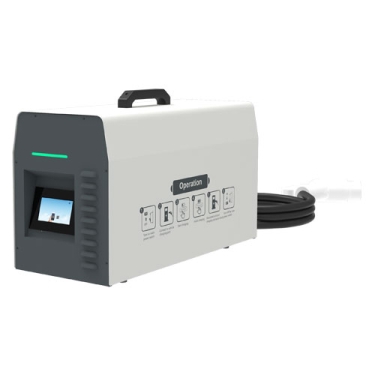
Another option is public parking lots, such as shopping malls, office buildings, and park parking lots. The common pitfall here is that the property rights holder and the operator are not the same group of people. Today, they signed a contract and tomorrow, they will change the parking space plan. There are also cases where capacitors are "reserved". Although there is capacitance in the community or building, the property or power company says "it needs to be kept for future equipment use" and does not approve it. In terms of installation conditions, it is generally necessary to specify that the lease term of the site should be at least three to five years, and at the same time obtain the approval letter for grid connection. If the capacitor is indeed stuck, you can consider using AC slow charging piles as the main option, with a small amount of DC fast charging, or using charging devices with local energy storage buffers to cut peak hours and fill valleys without competing for capacitors. Hongjiali(HG Power) has an integrated storage and charging solution that can charge the car with its own battery when the capacitor is insufficient, and store electricity during low electricity prices. This reduces the requirements for the power grid and makes installation easier.
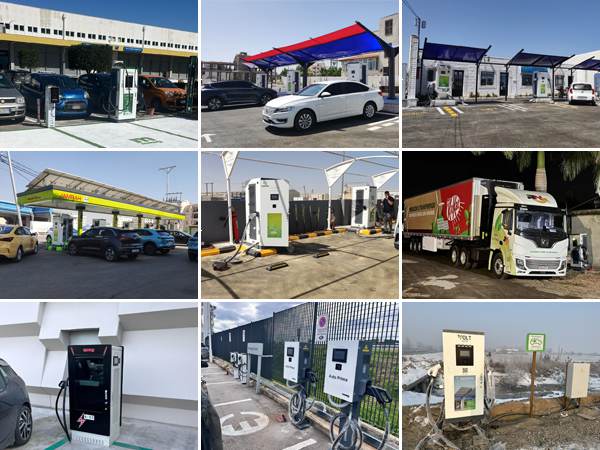
In fact, regardless of the scenario, by checking the capacitance in advance, confirming the ownership of the site, and sorting out the approval sequence, in most cases, a way can be found. If you are stuck in any particular link, please check if there are any corresponding flexible, storage and charging, or time-sharing scheduling solutions as alternatives. Don't rush to conclusions, ask more experienced people, and you may avoid many detours.
According to the "Notice on the Arrangement o...
From June 14th to 16th, The sm
Exhibition : EVS37-World Elect
For electric car charging stat
Difficulties and Suggestions for Attracting Mercha...
As the world's awareness of reducing carbon em...
How much cable is needed for a 480kW DC charger? I...
Installing public ev charging stations is a projec...
The core difference between liquid cooled electric...
Whenever you need us, we're here for you. --- Contact us for all your support needs, from technology, general queries to information support, etc. Our hotline numbers and e-mail are open 24hx7d for your needs.
 +86 18924678741
sales@hjlcharger.com
Shenzhen City, Guangdong Province, China
+86 18924678741
sales@hjlcharger.com
Shenzhen City, Guangdong Province, China