

-
 +86 18924678741
 -
 sales@hjlcharger.com
 -
 Shenzhen City, Guangdong Province, China
Nowadays, there are more and more electric heavy-duty trucks, but charging stations cannot keep up with the demand. It is difficult for drivers to charge and operators to build stations, all of which are real problems. Below are the core difficulties, practical needs, and corresponding solutions.
Firstly, the charging power is insufficient, and it is also prone to crashing the power grid. Electric heavy-duty truck batteries have a basic charge of 300-600 kWh, with a regular charger of 120kW. Charging once takes one or two hours, which delays work. The key is that if the power of a heavy truck exceeds 300kW, one heavy truck can exceed the electricity consumption of a residential area. At the same time, charging can easily cause the power grid to trip, and the approval process for power grid capacity expansion is slow and expensive, which is the biggest obstacle. The driver's needs are simple: fast charging, don't wait in line; The operator's demand is to avoid frequent tripping and reduce the cost of power grid renovation.
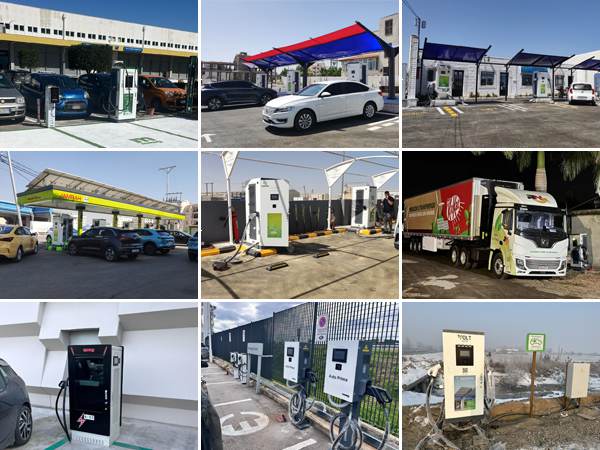
Secondly, it is difficult to find a venue and the layout is not yet reasonable. Heavy trucks are large in size, requiring a large space for turning and U-turns, and the space for ordinary car charging stations is simply not enough. And now there are charging stations clustered in urban areas and a few logistics parks, places where heavy trucks often run such as highways, ports, and mining areas, and there are very few chargers, making it difficult for drivers to find a place to charge during long-distance trips. The requirement is that the venue is large enough, easy to enter and exit, and there are chargers in key roads and areas.
Then there are large investments, slow cost recovery, and complicated operations. Building a standard heavy-duty truck charging station, upgrading equipment to the power grid, can cost several million yuan and take 3-5 years to recoup costs, which many people dare not invest in. There are also many problems during operation: incompatible charging of heavy trucks from different brands, disorderly queuing during peak hours, easy failure of high-power equipment, high maintenance costs, and it is common for equipment to break down without repair. The demand is to build websites with less money, operate them with ease, and have durable and compatible equipment.
Finally, let's talk about the corresponding solutions, which are practical measures that can be implemented.
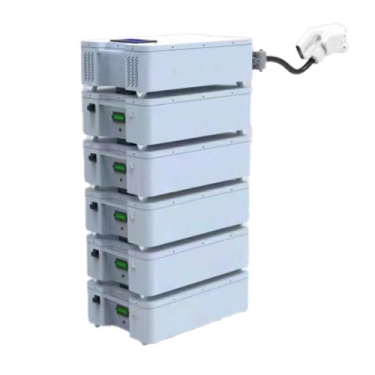
Firstly, use integrated light storage and charging+flexible charging stack. Installing energy storage batteries, storing electricity during low periods and discharging during high periods, without the need for large-scale grid changes, can build supercharging stations with 50kW of mains power to avoid tripping. Using flexible charging technology, as long as the total power is sufficient, it can be distributed to multiple heavy trucks, and whoever is short of power will receive more supply points, improving utilization and reducing queues.
Secondly, choose the right venue and arrange it reasonably. Priority should be given to industrial/commercial land near logistics parks, ports, mining areas, and highway entrances and exits, with sufficient land and stable traffic flow. Agricultural land should be avoided to avoid the risk of illegal construction. The site design should leave enough space for turning and U-turns, with wider passages to facilitate the entry and exit of large vehicles.
Thirdly, reduce investment and simplify operations. Choose modular equipment that can be expanded in the later stage and cost less in the initial stage. Using an intelligent management platform to remotely monitor the status of equipment, with automatic alarms in case of malfunctions, reducing manual inspections; Unified charging interface and protocol to solve compatibility issues with different brands of heavy-duty trucks. In addition, offering comprehensive services of "charging+rest+maintenance" can earn more money and shorten the payback period.
Ultimately, the core of electric heavy-duty truck charging stations is to solve the four problems of "fast charging, stable power grid, sufficient space, and profitable". By implementing these points, drivers can easily charge and operators are willing to build, the industry can move forward normally.
【See you in 3 days! Meet us at Solar Power Interna...
Focus on the future of energy and start a green ch...
Tomorrow is near, and the future is here! There ar...
For greece electric car charge
With the rapid development of the electric vehicle...
The following is an overview of the business plan ...
Installing public ev charging stations is a projec...
Charging an electric vehicle a
How much do EV charging statio
Whenever you need us, we're here for you. --- Contact us for all your support needs, from technology, general queries to information support, etc. Our hotline numbers and e-mail are open 24hx7d for your needs.
 +86 18924678741
sales@hjlcharger.com
Shenzhen City, Guangdong Province, China
+86 18924678741
sales@hjlcharger.com
Shenzhen City, Guangdong Province, China