

-
 +86 18924678741
 -
 sales@hjlcharger.com
 -
 Shenzhen City, Guangdong Province, China
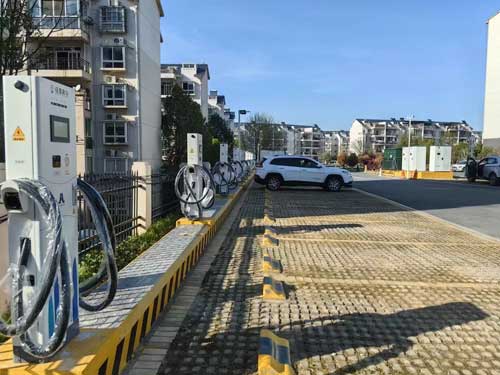
Ev charger solutions involve multiple aspects, including charger design, use, maintenance, and troubleshooting. The following are solutions from these aspects:
1. Design solutions
1.1. Modular design:
Modular design is used to divide the electric vehicle charger into multiple sub-modules, such as a full-bridge voltage source converter on the AC side and a SEPIC converter on the battery side. This design can improve safety and operational flexibility while reducing the risk of failure.
Modular design can also achieve decentralized control of power converters, making the system more efficient and reliable.
1.2. Integrated design:
Integrated OBC (on-board charger) design combines power electronic converters into a single architecture to operate electric vehicles in braking, driving, and charging modes. This helps to reduce size, weight, and space.
Integrated design can also reduce connection points, reduce failure rates, and improve the overall performance of the system.
1.3. Bidirectional power converter:
Using a bidirectional power electronic converter allows current to flow in both directions. This not only improves charging efficiency, but also enables energy recovery, such as converting kinetic energy into electrical energy for storage during braking.
2. Usage solutions
2.1. Correct connection:
Before charging, be sure to check whether the charger is connected to the electric vehicle correctly. Make sure the plug is firmly inserted without looseness or false connection.
Follow the operating sequence of "insert the battery box plug first, then the socket plug; vice versa when charging is finished".
2.2. Environmental requirements:
The charger should be placed in a well-ventilated, dry environment, away from direct sunlight and high temperature. This helps to extend the life of the charger and maintain its stable performance.
It is forbidden to cover the charger with objects to avoid affecting heat dissipation and causing fire hazards.
2.3. Voltage matching:
Make sure the output voltage of the charger matches the rated voltage of the electric vehicle battery. Too high voltage may damage the battery, while too low voltage may result in low charging efficiency.
3. Maintenance solutions
3.1. Regular inspection:
Regularly check the appearance of the charger to see if there is any damage or deformation. If any problems are found, contact professionals for repair or replacement in time.
Check whether the charging cable is damaged or aging, and replace it in time if necessary.
3.2. Cleaning and maintenance:
Clean the surface of the charger regularly to keep it clean. Dust and dirt easily accumulate on the surface of the charging device, which will affect heat dissipation and appearance.
When cleaning, wipe gently with a dry cloth, and avoid using a wet cloth or chemical cleaners.
3.3. Grounding check:
Check the grounding of the charger regularly to ensure that the grounding wire is firm and reliable. Poor grounding may cause electric shock risk or equipment damage.
4. Troubleshooting solutions
4.1. Overvoltage protection:
If the charger has an overvoltage protection failure, first disconnect the overvoltage protection circuit and then measure the main voltage of the power supply. If the voltage is abnormal, check whether the sampling resistor, precision reference voltage source and optocoupler in the control loop are damaged or the performance is degraded.
4.2. Power tube failure:
If the charger cannot work properly, it may be that the power tube is damaged. At this time, check whether the current limiting resistor of the power tube and the overcurrent protection circuit of the power supply are normal.
4.3. Fan failure:
If the charger does not dissipate heat well or the fan does not rotate, check whether the transistor of the fan is damaged. If the transistor is normal, it may be a problem with the fan itself. At this time, the fan can be removed and its performance can be tested separately.
In summary, the electric vehicle charger solution needs to be considered comprehensively from multiple aspects such as design, use, maintenance and troubleshooting. By adopting advanced design technology, correct use methods, regular maintenance inspections and timely troubleshooting measures, the safe, reliable and efficient operation of electric vehicle chargers can be ensured.
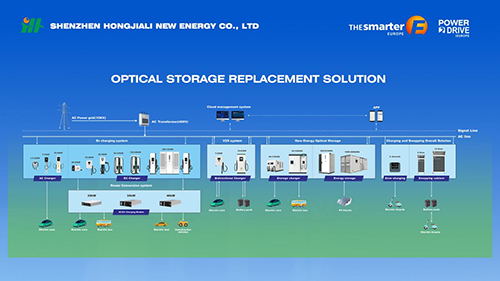
If you want to know more about "ev charger solution", you can consult us online or by email (sales@hjlcharger.com). We are a professional provider of new energy electric vehicle charging solutions, charging and battery replacement solutions, integrated photovoltaic storage and charging solutions, and power conversion solutions.
A new era of charging! Hongjiali's ultra-quiet...
Mid-Autumn Festivaland National DayHoliday NoticeA...
Hongjiali New Energy appeared
Home charging is the most affo
Ev charging station factory Ho
For electric vehicle charging
More and more people are installing electric vehic...
Many people are asking how much it costs to build ...
How does a dc fast charger wor
Whenever you need us, we're here for you. --- Contact us for all your support needs, from technology, general queries to information support, etc. Our hotline numbers and e-mail are open 24hx7d for your needs.
 +86 18924678741
sales@hjlcharger.com
Shenzhen City, Guangdong Province, China
+86 18924678741
sales@hjlcharger.com
Shenzhen City, Guangdong Province, China