

-
 +86 18924678741
 -
 sales@hjlcharger.com
 -
 Shenzhen City, Guangdong Province, China
Nowadays, there are more and more electric vehicles on the road, and electric car chargers are also everywhere. But there is one thing that people may not pay much attention to, which is the DC meter inside the electric car charger. To put it simply, how do you know how much electricity you have charged and how much you should pay. This sounds simple, but in reality it's a bit troublesome.
Let's talk about the difficulties first. DC metering is different from home AC meters, as DC current is high, voltage is high, and there are significant changes in current during charging. Some chargers are exposed to wind and sun outdoors, and as the temperature changes, the characteristics of the measuring devices also change, and the measured values may not be as accurate. There is also electromagnetic interference, as there are many devices inside and outside the charger, making the metering module susceptible to interference. Another common saying is that over time, components age, zero drift, and errors gradually emerge. When these situations are combined, car owners feel that they have charged too little, while operators feel that they have not given too much. The two sides cannot reconcile their accounts, which is quite a headache.
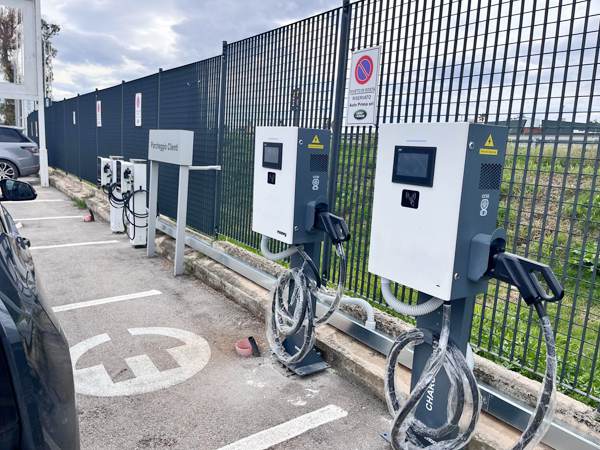
Let's talk about the demand. It's very simple for car owners, they just want to know how much electricity has been charged and not be overcharged. As for the operator, we hope that the measurement is stable and reliable, and there will be no complaints due to errors. It would be best if it is easy to maintain and the cost is not too high. In addition, regulatory authorities are also pushing for mandatory calibration of electric vehicle chargers, requiring compliant measurement, which can also be considered an external driving force.
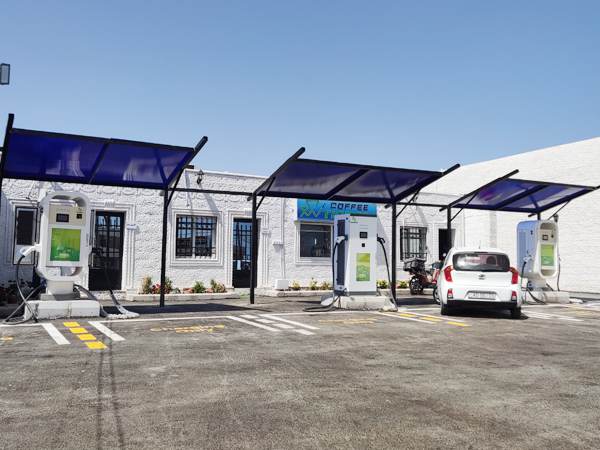
Do you have any reference ideas? Say a few directions that may not be comprehensive but can be explored.
One is to choose measurement chips and sensors with small temperature drift and strong anti-interference ability as much as possible, such as using a splitter with high-precision sampling or Hall closed loop scheme, each with its own advantages and disadvantages, depending on the specific scenario.
The second is to add temperature compensation and self calibration mechanism, so that the equipment can automatically adjust in both cold and hot weather, reducing drift.
Thirdly, the backend can have a data comparison function, such as saving the voltage and current curves of each charge, so that in case of any disputes, one can look back at the situation at that time. Also, don't extend the calibration cycle too long, especially for high-power DC chargers. Regularly run them with a standard meter to have a sense of confidence.
Not all of these methods may be applicable, as each station has different conditions and costs. But the general direction is to minimize external interference and make the measurement more closely related to the actual situation. There should be less confusion between car owners and operators, so that the small matter of charging can be more smooth sailing. Anyway, technology is still moving forward and will gradually become more reliable.
Tomorrow is near, and the future is here! There ar...
THE 4TH PEVS 2025 THE LEADING EV SHOW IN INDONESIA...
According to the General Office of the State Counc...
How much does it cost to charg
For ev chargers in Thailand, l
EV charger cost range from $20
The electric car charging syst
In recent years, new energy vehicles have been run...
Ev charging levels are usually
Whenever you need us, we're here for you. --- Contact us for all your support needs, from technology, general queries to information support, etc. Our hotline numbers and e-mail are open 24hx7d for your needs.
 +86 18924678741
sales@hjlcharger.com
Shenzhen City, Guangdong Province, China
+86 18924678741
sales@hjlcharger.com
Shenzhen City, Guangdong Province, China