

-
 +86 18924678741
 -
 sales@hjlcharger.com
 -
 Shenzhen City, Guangdong Province, China
What is the difference between a regular electric vehicle charger and a liquid cooled electric vehicle charger
The difference between ordinary electric vehicle chargers and liquid cooled electric vehicle chargers lies in their different heat dissipation methods, which lead to a series of differences such as charging speed, usage scenarios, and maintenance difficulty.
1. The most crucial difference is the heat dissipation method
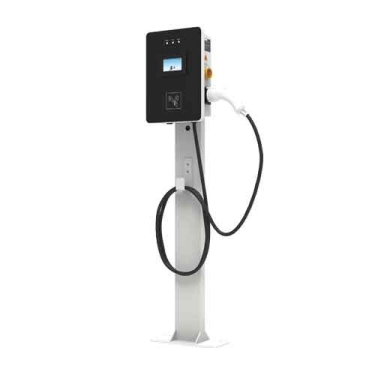
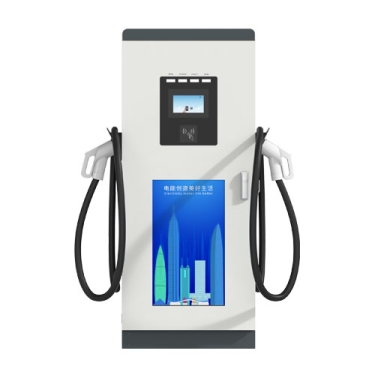
• Ordinary electric vehicle chargers use natural heat dissipation or fan air cooling, relying on heat sinks and air convection to remove the heat generated during charging. The structure is simple and does not require additional cooling components.
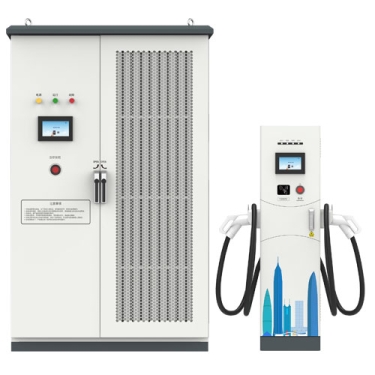
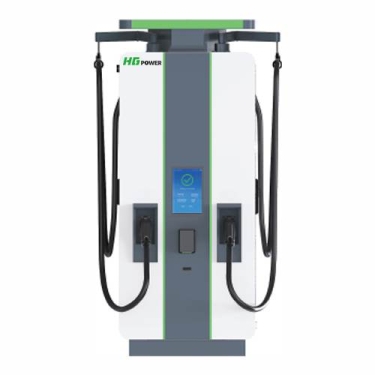
• Liquid cooled electric vehicle chargers use internally circulating coolant to directly remove heat from core components, with much higher heat dissipation efficiency than ordinary electric vehicle chargers, and can adapt to long-term high-power charging.
2. Significant difference in charging speed
• Ordinary electric vehicle chargers are limited by heat dissipation and generally have low power. Fast charging usually takes more than 30 minutes to charge to 80% of the battery, while slow charging takes several hours.
• Liquid cooled electric vehicle chargers, due to their efficient heat dissipation, can withstand higher power and can charge up to 80% in 10-20 minutes. Some high-power models have faster charging speeds and are suitable for situations where time is tight.
3. Each usage scenario has its own emphasis
• The ordinary electric vehicle charger has a simple structure and low cost, suitable for installation in daily scenarios such as residential parking lots and office parking spaces, meeting the charging needs of private cars after daily commuting. It is also easy to maintain, only requiring regular cleaning of the air duct.
• Liquid cooled electric vehicle chargers are more suitable for high-frequency and high demand scenarios such as high-speed service areas and logistics parks, and can handle continuous fast charging of multiple vehicles. However, regular inspections of the coolant and pipelines are required, and maintenance is slightly more complex.
4. The user experience and cost also vary
• The charging cable of a regular electric vehicle charger is thicker and heavier, making it slightly more difficult to operate;
• The liquid cooled electric vehicle charger cable is thinner and more flexible, making it easy to operate with one hand.
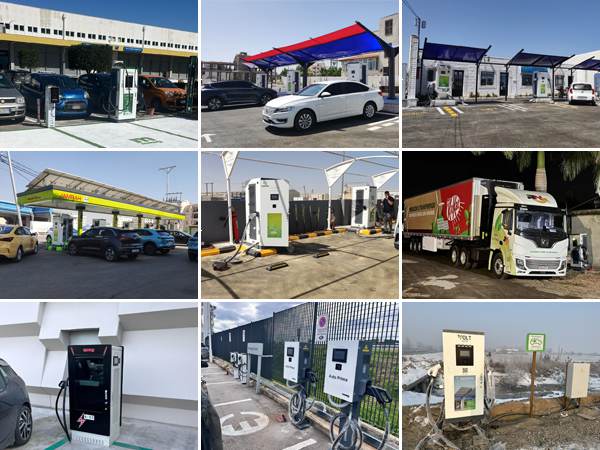
In terms of cost, ordinary electric vehicle charger equipment is cheap and easy to install; Liquid cooled electric vehicle chargers have higher equipment and installation costs due to the addition of a cooling system.
Overall, there is no superiority or inferiority between the two. Ordinary electric vehicle chargers are suitable for daily slow charging and low-cost needs, while liquid cooled electric vehicle chargers are suitable for high-speed fast charging and high load scenarios. You can choose according to your own usage needs, without blindly pursuing high-end.
Privacy PolicyThis privacy pol
Hongjiali New Energy appeared
HG POWER cordially invites you to The Energy Trans...
Ev charger solutions involve multiple aspects, inc...
As the global penetration rate of new energy vehic...
22kW wall-mounted box usually
How long does a 60kw charger take to charge? Gener...
How do ev charging points work
Collaboration on new energy vehicle chargers: Don&...
Whenever you need us, we're here for you. --- Contact us for all your support needs, from technology, general queries to information support, etc. Our hotline numbers and e-mail are open 24hx7d for your needs.
 +86 18924678741
sales@hjlcharger.com
Shenzhen City, Guangdong Province, China
+86 18924678741
sales@hjlcharger.com
Shenzhen City, Guangdong Province, China