

-
 +86 18924678741
 -
 sales@hjlcharger.com
 -
 Shenzhen City, Guangdong Province, China
The core difference between liquid cooled electric vehicle chargers and ordinary electric vehicle chargers lies in their different heat dissipation methods, which bring about three main differences in user experience: charging speed, cable weight, and equipment cost.
1、 Charging speed
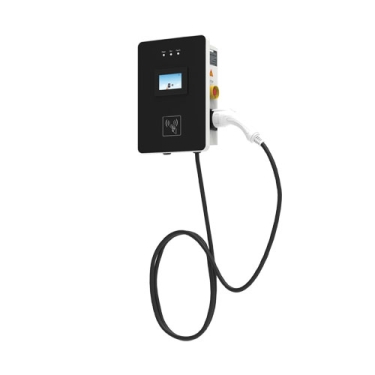
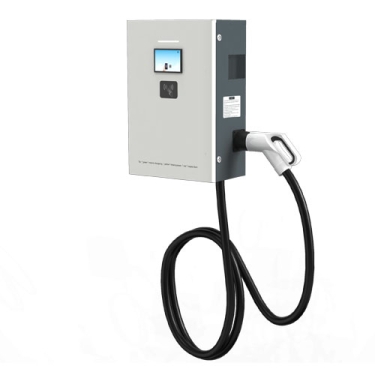
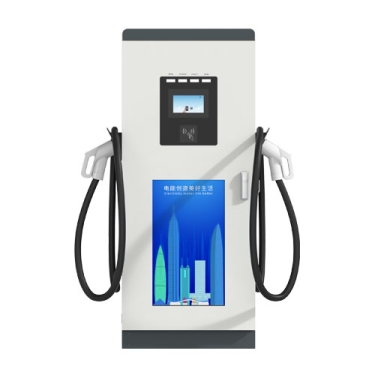
1. Ordinary electric vehicle chargers mostly rely on natural air cooling or fan blowing, with limited heat dissipation capacity. To prevent overheating, the charging power should not be too high. Generally, fast chargers only have 40-60 kilowatts, and it takes half an hour to an hour to fully charge a car.
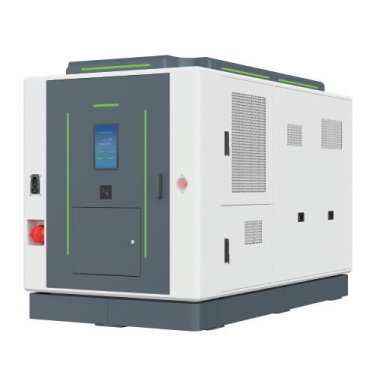
2. Liquid cooled electric vehicle chargers use circulating coolant to remove heat, resulting in much higher heat dissipation efficiency. Therefore, the charging power can reach several hundred kilowatts or even higher. For example, some liquid cooled superchargers with a nominal power of over 500 kilowatts can theoretically run 200 kilometers in 5 minutes, reducing the time to about a quarter of regular fast charging.
2、 Cable feel
1. In order to carry high currents, ordinary electric vehicle chargers must use thick copper wires, with an external insulation layer, and the plugs and cables are thick and heavy. You may find it difficult to operate with one hand, especially in winter when the cables become harder and even more inconvenient.
2. The cable of the liquid cooled electric vehicle charger has a hollow structure inside, and the coolant flows directly near the conductor to take away heat in a timely manner. Therefore, the copper wire can be made thinner, and the overall cable is thin and light, as flexible as the wires of ordinary household vacuum cleaners, making it easy to grip with one hand.
3、 Equipment cost and maintenance
1. The technology of ordinary electric vehicle chargers is mature, without complex liquid cooling systems, inexpensive, and easy to install. A regular fast charger may cost tens of thousands of yuan.
2. Liquid cooled electric vehicle chargers need to be equipped with additional coolant circulation pumps, radiators, pipelines, seals, and to prevent liquid leakage. The price of the entire equipment is much higher, and a liquid cooled supercharging may cost over 200000 yuan. Moreover, the pump and seals have a lifespan and require regular maintenance. In case of leakage, it may cause a short circuit or damage to the equipment.
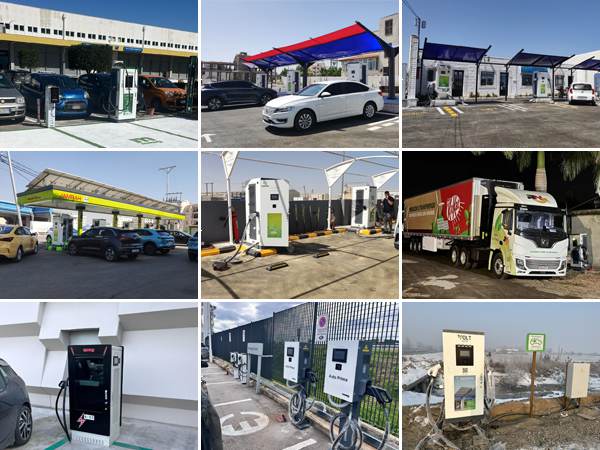
So liquid cooled electric vehicle chargers are faster and have lighter cables, but they are expensive and require more maintenance; Ordinary electric car chargers are sufficient, cheap, and sturdy, but they are slow and have heavy cables.
How to choose an electric car charger depends on the actual situation. If you have to travel long distances and are in a hurry, you can look for liquid cooled supercharging; For daily commuting, don't worry, a regular charger is completely sufficient.
HG POWER heavy-duty truck energy replenishment net...
2024-European Smart Energy Exh
Top 10 charging and swapping brandsTop 10 brands i...
The power source of electric v
Whatcompaniesmakeelectricvehic
What is the importance of BMS
The price of charging an elect
There are many ways to charge
An electric car charging units
Whenever you need us, we're here for you. --- Contact us for all your support needs, from technology, general queries to information support, etc. Our hotline numbers and e-mail are open 24hx7d for your needs.
 +86 18924678741
sales@hjlcharger.com
Shenzhen City, Guangdong Province, China
+86 18924678741
sales@hjlcharger.com
Shenzhen City, Guangdong Province, China